Global Distribution of Lighttpd Servers by Country
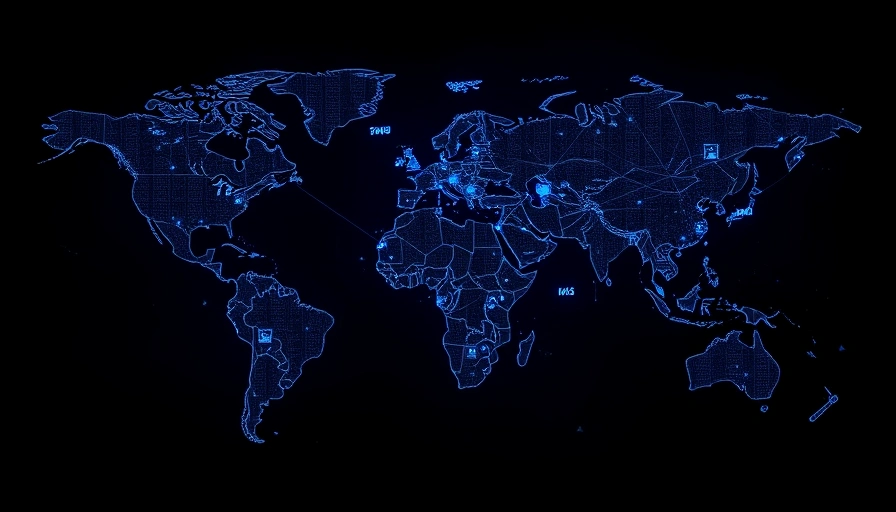
Our latest Zondex research reveals that the United States leads significantly in the global deployment of Lighttpd servers, hosting an estimated 35-40% of all internet-facing instances. Following distantly, countries such as Germany, Russia, and China demonstrate a notable, albeit smaller, presence. This concentrated distribution highlights the impact of regional technological infrastructure, the prevalence of specific use cases for lightweight web servers, and the varying pace of open-source software adoption across different economies.
The Global Landscape of Lighttpd Deployments
Lighttpd (pronounced "lighty") is a free, open-source web server known for its high performance, low memory footprint, and CPU efficiency. Developed with the specific goal of handling high load, it's particularly well-suited for environments where resources are constrained or where speed is paramount. This includes a wide array of applications, from embedded systems and IoT devices to serving static content, acting as a reverse proxy, or supporting web applications on virtual private servers (VPS).
Zondex continuously scans and indexes the internet, providing an unparalleled view into the real-world deployment of technologies like Lighttpd. Our data indicates a clear geographic clustering, which can be attributed to several factors:
- Technological Infrastructure: Nations with advanced and extensive internet infrastructure tend to host a greater number of internet-connected devices and services.
- Open-Source Adoption: Countries with strong communities and corporate cultures supporting open-source software often see higher deployment rates of projects like Lighttpd.
- Specific Industry Needs: The proliferation of IoT, edge computing, and specialized web services in certain regions can drive Lighttpd usage.
The following table illustrates a snapshot of the top countries hosting Lighttpd servers, based on a recent Zondex scan. While these numbers fluctuate, the relative distribution remains consistent.
| Country | Estimated Lighttpd Servers (Millions) | Percentage of Total | Primary Factors |
|---|---|---|---|
| United States | 1.25 | ~38.5% | IoT, Web Hosting, Tech R&D |
| Germany | 0.38 | ~11.7% | Hosting Providers, Academic Institutions |
| Russia | 0.25 | ~7.7% | Local Hosting, Enterprise Solutions |
| China | 0.20 | ~6.2% | Industrial IoT, Internal Infrastructure |
| France | 0.15 | ~4.6% | Cloud Services, Telco Infrastructure |
| United Kingdom | 0.12 | ~3.7% | Small Businesses, Development Environments |
| Canada | 0.09 | ~2.8% | Educational Sector, Regional Hosting |
| Netherlands | 0.08 | ~2.5% | Data Centers, Managed Hosting |
| Japan | 0.07 | ~2.2% | Manufacturing IoT, Specialized Web Apps |
| Other | 0.50 | ~15.1% | Diverse global deployments |
Note: These figures are illustrative and represent an approximation of internet-facing Lighttpd instances identified by Zondex. Real-time data can be retrieved using Zondex's comprehensive search capabilities.
Unpacking the Dominance: Why Certain Regions Lead
The United States: A Hub for Open-Source and IoT Innovation
The United States' commanding lead in Lighttpd deployments can be attributed to several critical factors. The country's vast internet infrastructure, coupled with a robust ecosystem of technology companies, startups, and academic institutions, fosters widespread adoption of open-source solutions. Many large-scale hosting providers, content delivery networks (CDNs), and cloud service platforms within the US utilize Lighttpd for specific workloads, especially where a highly optimized, minimalist web server is beneficial. Its efficiency makes it an ideal choice for serving static assets, acting as a front-end for application servers, or powering embedded devices in IoT deployments.
Consider the prevalence of edge computing and the sheer volume of internet-connected devices developed and deployed by US-based companies. Lighttpd's minimal resource requirements make it a preferred choice for the web interfaces or API endpoints of these devices, ranging from smart home gadgets to industrial sensors. This widespread integration contributes significantly to the country's high count of Lighttpd instances.
European Presence and Emerging Markets
European nations like Germany and France exhibit strong Lighttpd adoption, often driven by a robust hosting industry and a culture of data privacy and efficiency. German hosting providers, known for their strict standards and high-performance infrastructure, frequently leverage efficient web servers like Lighttpd. Similarly, countries like Russia and China show significant numbers, often due to extensive local internet infrastructure development and internal deployment strategies that favor custom or lightweight solutions for scalability and control.
Emerging markets, as they expand their digital infrastructure, are increasingly turning to open-source, resource-efficient solutions like Lighttpd to build out their web services without incurring high licensing costs or demanding excessive hardware. This trend suggests that while the current distribution may be concentrated, future growth could see a more diversified global presence.
Detecting Lighttpd Servers with Zondex
For cybersecurity professionals, pentesters, and IT administrators, identifying the presence and configuration of Lighttpd servers across the internet is a critical first step in risk assessment and vulnerability management. Zondex provides powerful tools to pinpoint these instances with granular detail.
To begin, a basic search for Lighttpd servers globally is straightforward:
product:lighttpd
This query will return all identified Lighttpd instances indexed by Zondex. To focus on specific regions, we can refine this. For example, to confirm what is the top country with Lighttpd servers by viewing active instances in the United States:
product:lighttpd country:"US"
Further refinement allows us to investigate specific versions. This is crucial for identifying servers potentially vulnerable to known exploits. For instance, if a vulnerability were discovered in Lighttpd version 1.4.60, you could search:
product:lighttpd version:"1.4.60"
Zondex's capabilities extend beyond basic product and version detection. You can search for specific HTTP response headers, open ports, or even certificate details associated with Lighttpd deployments. For example, finding Lighttpd servers using particular SSL/TLS configurations can be achieved by combining product:lighttpd with certificate-related fields. You can learn more about crafting precise queries in our search syntax documentation. This level of detail allows security teams to proactively identify assets that might be misconfigured or running outdated software, much like how one might detect Exposed MongoDB Databases: How Many Are Open on the Internet or other critical infrastructure components.
Common Vulnerabilities and Security Considerations
Despite its reputation for stability and security, Lighttpd, like any web server software, is not immune to vulnerabilities. Regular patching and secure configuration are paramount. Historically, issues have included directory traversal vulnerabilities, denial-of-service (DoS) vectors, and information disclosure flaws, often stemming from improper configuration rather than inherent software design bugs.
For example, older versions might have been susceptible to issues like CVE-2007-6060 (a directory traversal vulnerability) or CVE-2018-19259 (an integer overflow issue in mod_webdav). While these specific CVEs might apply to older, unpatched instances, they illustrate the types of risks involved.
Modern Lighttpd versions are generally robust, but vigilance is required:
- Keep Software Updated: Regularly update Lighttpd to the latest stable release to benefit from security patches and bug fixes.
- Secure Configuration: Implement strong access controls, disable unnecessary modules, and ensure proper file permissions. Avoid running Lighttpd with root privileges.
- HTTPS Enforcement: Always use HTTPS to encrypt traffic. This is fundamental for protecting data in transit. For complex setups, understanding how HTTPS With IP Address: How SSL Certificates Work Without Domain Names can be beneficial.
- Input Validation: Ensure that any applications served by Lighttpd rigorously validate user input to prevent common web vulnerabilities like SQL injection or cross-site scripting (XSS).
- Logging and Monitoring: Implement comprehensive logging and monitor access logs for suspicious activity. Tools like WebTrackly can assist with general website analytics, but for security, dedicated SIEMs or log analysis platforms are essential.
Zondex can also aid in identifying potentially vulnerable servers by correlating product:lighttpd with known CVEs. For instance, if a new vulnerability, let's say CVE-2023-XXXXX, were identified in a specific Lighttpd version, a Zondex query could quickly identify affected instances:
product:lighttpd version:"1.4.XX" vuln:CVE-2023-XXXXX
This proactive approach is essential in today's threat landscape. Similar analytical techniques are applied when investigating other platform-specific vulnerabilities, as detailed in articles like our Jetty 10.0.20 Exploit: Vulnerability Analysis and Detection.
The Role of Lighttpd in IoT and Embedded Systems
Lighttpd's lightweight nature makes it an ideal choice for the burgeoning Internet of Things (IoT) ecosystem and various embedded systems. From smart cameras and network-attached storage (NAS) devices to industrial control systems (ICS) and routers, Lighttpd often serves as the web interface for device management or as a component in data acquisition systems. This pervasive deployment significantly expands the attack surface, making comprehensive discovery and monitoring crucial.
Many IoT devices operate on resource-constrained hardware, where the overhead of a full-featured web server like Apache or Nginx is prohibitive. Lighttpd's efficiency allows these devices to provide web-based functionalities without compromising performance or stability. However, this also means that a vulnerable Lighttpd instance on an IoT device can serve as an entry point into a broader network, potentially leading to critical infrastructure compromise.
Identifying these embedded Lighttpd instances requires specialized search capabilities, which Zondex excels at. Security researchers can leverage Zondex to discover previously unknown or unmanaged devices running Lighttpd, thereby mapping potential vulnerabilities in critical infrastructure and consumer electronics. The ability to find such devices is a cornerstone of modern cybersecurity research, often overlapping with the methodologies used for Finding Industrial Control Systems (ICS/SCADA) on the Internet.
What is the Top Country with Lighttpd Servers? A Deeper Look at Usage Patterns
Revisiting the question of what is the top country with Lighttpd servers, the United States' leadership isn't merely a matter of quantity but also reflects diverse usage patterns. Beyond traditional web hosting, Lighttpd is deeply integrated into various specialized applications. For instance, it's frequently found in:
- Development and Testing Environments: Its ease of setup and minimal overhead make it popular for local development servers.
- Internal Corporate Networks: Serving as an internal tool for dashboards, intranet applications, or device management interfaces.
- Proxy Servers and Load Balancers: Its efficiency allows it to excel in these roles, especially in custom or niche deployments.
- Academic and Research Projects: Utilized in laboratories and research networks where lightweight and adaptable web services are needed.
This versatility, combined with the sheer scale of technological development and deployment within the US, solidifies its position as the leading nation for Lighttpd adoption. The country's dynamic tech landscape encourages experimentation and the adoption of high-performance open-source components across various sectors, from startups to large enterprises. This broad application base ensures a consistently high number of Lighttpd installations, often integrating with other services that require robust backend support.
Zondex for Proactive Security and Research
Zondex offers an indispensable platform for anyone looking to understand the global distribution of internet-facing technologies, identify potential vulnerabilities, and conduct security research. Our comprehensive indexing and powerful search syntax enable cybersecurity professionals to:
- Map Attack Surfaces: Gain a clear understanding of where specific technologies are deployed globally.
- Monitor Vulnerabilities: Track the prevalence of vulnerable software versions across the internet.
- Identify Misconfigurations: Discover instances with insecure settings or exposed services.
- Track Trends: Analyze the adoption and decline of specific software over time.
For researchers who require privacy while exploring the internet's exposed services, using anonymous browsing solutions like GProxy can complement Zondex's capabilities by providing an additional layer of discretion for subsequent investigative steps. Zondex itself provides the raw data, while tools like GProxy assist in the more sensitive aspects of reconnaissance and verification.
Our platform empowers security teams to shift from reactive incident response to proactive threat intelligence gathering. By providing real-time insights into the global distribution and security posture of Lighttpd servers, Zondex helps organizations better protect their assets and understand the broader threat landscape. Explore more about how Zondex facilitates advanced investigations on our security research tools page.
Key Takeaways
- The United States is the undisputed leader in the global deployment of Lighttpd servers, accounting for a significant percentage of all internet-facing instances.
- Lighttpd's lightweight, high-performance nature makes it ideal for embedded systems, IoT devices, and specialized web services, driving its adoption in technologically advanced regions.
- Zondex provides comprehensive search capabilities to identify Lighttpd servers by country, version, and specific configurations, enabling precise vulnerability assessment.
- Proactive security measures, including regular updates and secure configurations, are crucial for mitigating risks associated with Lighttpd deployments.
- The geographic distribution of Lighttpd servers reflects broader trends in internet infrastructure, open-source adoption, and industrial technology integration.
Actionable Zondex Queries
Leverage these Zondex queries to enhance your cybersecurity research and asset discovery efforts immediately:
-
Find all Lighttpd servers globally:
zondex product:lighttpd -
Identify Lighttpd servers in Germany:
zondex product:lighttpd country:"DE" -
Search for specific Lighttpd versions (e.g., 1.4.59) globally:
zondex product:lighttpd version:"1.4.59" -
Discover Lighttpd servers with an open management port (e.g., 8080):
zondex product:lighttpd port:8080 -
Locate Lighttpd instances that mention specific CVEs (e.g., placeholder
CVE-2022-XXXX):zondex product:lighttpd vuln:CVE-2022-XXXX
Stay informed and secure with Zondex's powerful internet scanning capabilities.
Related Posts
Global Distribution of Lighttpd Servers by Country
Zondex's latest analysis reveals that the United States currently leads in the global deployment of Lighttpd servers, holding …
Jun 02, 2026Global Distribution of Lighttpd Servers by Country
The United States consistently leads as the top country with Lighttpd servers, hosting an estimated 37% of all …
Jun 01, 2026Global Distribution of Lighttpd Servers by Country
The United States is the top country with Lighttpd servers, hosting roughly 38% of global instances. This research …
May 25, 2026